




Similarly, the amount not yet allocated is not an indication of its current market value. Materiality is an accounting guideline that permits the violation of another accounting guideline if the amount is insignificant. For example, a profitable company with several million dollars of sales is likely to expense immediately a $200 printer instead of depreciating the printer over its useful life.
- It is a measurement of how your company has efficiently and effectively used its resources for its operations.
- Artificial intelligence addresses this challenge by automatically validating links between reports and identifying hidden discrepancies.
- A positive working capital amount is desirable and indicates the business has sufficient current assets to meet short-term obligations (liabilities) and still has financial flexibility.
- Do not include a security deposit in your income when you receive it if you plan to return it to your tenant at the end of the lease.
- An income statement provides information regarding the “results of operations” of a business, or otherwise known as “financial performance”.
How are the Cash Flow Statement and Balance Sheet Linked?
Finally, we will discuss the differences between Earnings, Cash from Operations, EBITDA, and Free Cash Flow. In such cases, revenue is recognized based on the percentage of completion of unearned revenue the project. This method provides a more accurate representation of the progress of the project and the revenue earned. In installment sales, revenue is recognized over the life of the contract, in line with the proportion of the purchase price received each period. This ensures that revenue is recognized in accordance with the goods or services delivered. Deferred revenue, also known as unearned revenue, represents payments received for goods or services that have yet to be delivered or performed.
Budgeted Income Statements
It must be aligned with the actual performance of services or delivery of goods. Recognizing deferred revenue prematurely can lead to overstated income, while delayed recognition can result in understated income. So, January operating profit is reduced by $108,000 from these payroll-related expenses (ignoring other expenses and any capitalization into inventory). Ultimately, financial statement analysis guides internal strategies and attracts external investment by showcasing financial strength and resilience. Each of these three sections tells us a unique and important part of the company’s sources and uses of cash over a specific time period. This analysis involves using various metrics and methods to assess profitability, liquidity, solvency, and efficiency, helping stakeholders make informed decisions about the financial status of a company.
Efficiency Ratios
It refers to the results of your company’s operations and profitability during a period. It is a measurement of how your company has efficiently and effectively used its resources for its operations. Operations are the activities of your company that encompass the purchasing, producing, selling, delivering, servicing, and administrating activities. The Income Statement, also called a Profit or Loss Statement, is a financial statement that gives a detailed information about the financial performance of an entity over a period of time. Financial ratio analysis is used by a company’s external and internal stakeholders to assess financial health. External users include investors, equity research analysts, lenders, and creditors.

Financial analysts use financial ratios to track a company’s financial performance over time, benchmark against peers, and support investment or credit decisions. Depending on the condition and expected salvage value of the asset, it may be sold for more or less than its carrying value. Since fixed assets are used for a longer period of time, they are likely to devalue with use. Depreciation is the practice of accounting for an asset’s decrease in value as it is used.
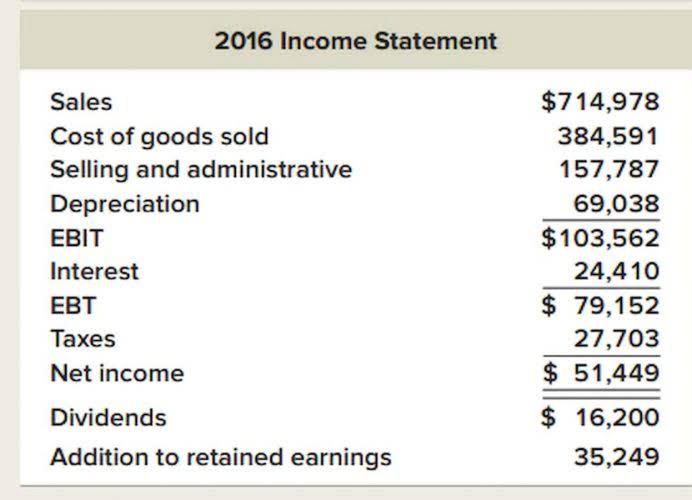
Since the business hasn’t fulfilled its obligation yet, this amount doesn’t qualify as income yet. We will start with the classification of cash flows into operating, investing, and financing activities. Then, we will work on preparing and analyzing the Statement of Cash Flows. We will wrap up the case on the start-up company by preparing and analyzing its income statement definition Statement of Cash Flows.
- Ideal for grant applications, board reports, and compliance, it includes key factors, such as financial position, functional expenses, and more.
- We will start with the classification of cash flows into operating, investing, and financing activities.
- To summarize, expenses can result to either a decrease in assets and equity, or an increase in liabilities and a decrease in equity.
- This helps complete the process of linking the 3 financial statements in Excel.
- In this tutorial we’ll learn the purpose of this key accounting report and go over a simple income statement example to learn its format and components.
- This gradually increases the revenue reported on the income statement over time.
Major expense categories — such as wages and rent — are clearly separated for easier financial tracking. It’s important to note that there are several different types of income statements that are created for different reasons. For example, the year-end statement that is prepared annually for stockholders and potential investors doesn’t do much good for management while they are trying to run the company throughout the year. Thus, interim financial statements are prepared for management to check the status of operations during the year.
- The Statement of Activities further breaks down your revenue and expenses according to any restrictions limiting how or when you may use them.
- Often shortened to “COGS,” this is how much it cost to produce all of the goods or services you sold to your customers.
- The income statement is one of three statements used in both corporate finance (including financial modeling) and accounting.
- Managers use this format for internal purposes because of the ease of preparing and analyzing it.
- However, keep in mind that the increase in equity does not include transactions related to additional investments or contributions made by the owners or holders of equity shares.
- This method is simpler to implement but can lead to fluctuations in revenue and misstatements in the financial statements.
How can you prevent errors in recognizing unearned revenue?

It is common to segregate fixed assets on the balance sheet by asset class, such as buildings or equipment, as separate lines on the balance sheet. This better shows the composition of an organization’s fixed assets and gives readers of financial statements more visibility into how fixed assets are being used. For example, a manufacturing company will probably have significant amounts of machinery and equipment as those are key to the primary business operations in https://www.elitecargobd.com/index.php/2023/02/24/honest-bookkeeping-services-in-miami-fl-by-bench/ that industry. Depending on the nature of an entity’s business, it may make sense to group items that share common characteristics or purposes.
Below is a short video explanation to help you understand the importance of retained earnings from an accounting perspective. Income can be produced either by the ordinary operating activities of your business or by incidental transactions that are outside these operating activities. The difference between these two producers of income lie on regularity and frequency of occurrence. The main types are liquidity, leverage, efficiency, profitability, and market value ratios. Instead, analysts use combinations of ratios to track a company’s performance trends, benchmark it against peers, and identify potential risks or strengths.